Christmas is the Light shining in the darkness. Every darkness. Your darkness.
And that's what it's all about.
Tuesday, December 29, 2009


Monday, December 14, 2009
Sermon: The Third Sunday of Advent
 Meat loaf and freshly dry cleaned suits: the things that angels sing about.
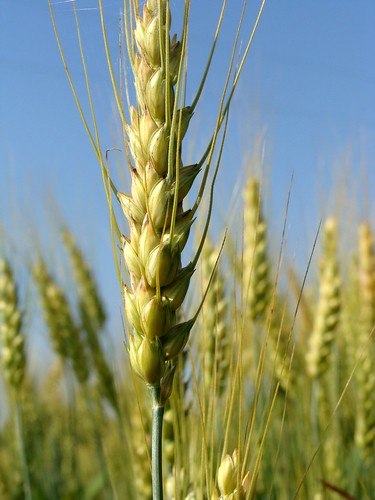
(Note: After preaching the sermon Larry Rose kindly noted that - with experience! - it's the chaff that blows away and the heavier wheat which falls to the ground. Not the other way around. If I'm not careful we're going to need a 'Live Sermon Fact Check' booth in the back of the church. . .)
Monday, December 7, 2009
Sermon: The Second Sunday of Advent
 When God tells you something wonderful is going to happen, you say. . . "Yes!"
Monday, November 30, 2009
Sermon: The First Sunday of Advent
 Advent means that God isn't finished with us yet. The Story of God is still going on, and we're a part of it. And if we keep awake, and if we keep our eyes open - we may like the shepherds and wisemen behold a new star at it's rising.
Tuesday, November 24, 2009
Looking forward to Sunday: The First Sunday of Advent
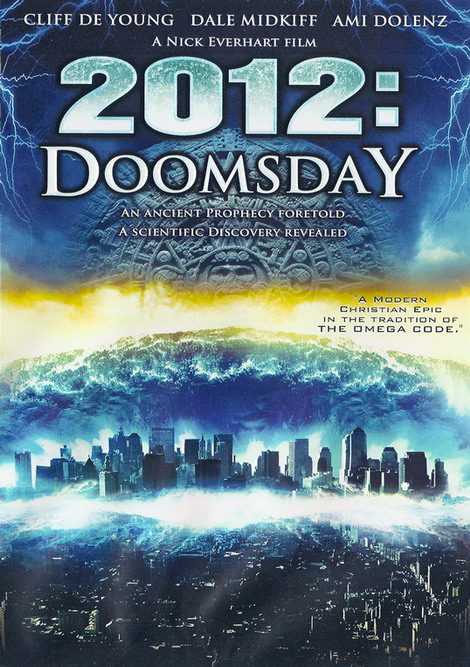 Apparently the Mayans believed that the world is going to end in 2012. Maybe you saw the movie in the last week or so. Karen and I are going tonight.
According to one, very small and questionably informed, group of modern Christians the world is going to end on May 21st, 2011. (I guess the Mayans were close? . . .) They base this date on a crazy string of biblical quotes from totally unrelated pieces of scripture, and depend on the date of 4990BC as the year of the flood (as in Noah). According to their calculations May 21, 2001 is 7,000 years to the day since Noah's Ark set sail on it's first and last voyage.
Hal Lindsey, the author of The Late Great Planet Earth, said that he thought that last decade of human history would be the 1980's.
Ooops.
The fascination with the 'End Times' has spurred a multi-billion dollar industry. Books, movies, websites, billboards - media of all types feeding curiosity of 'the end.'
Into this climate - and with two upcoming end-dates hovering over our heads - we enter Advent. And, Advent is about the coming of Christ, and the fulfillment of God's righteous victory over evil. Advent (a word which means 'the coming') end with the celebration of the first coming of Christ in a manger in Bethlehem, but Advent always begins by pointing our faith towards the next coming of Jesus.
Just about every week we state the mystery of our faith: Christ has died, Christ is risen, Christ will come again.
What do we mean by 'Christ will come again?' What did Jesus mean by the speaking of his return? What do the many references to 'the Day of the Lord' throughout the Old and New Testaments mean?
Do we join the crazies and build bunkers and arks? Do we claim that we've intellectually moved on from this pre-modern way of looking at the world and God? Or, is there something really here?
Not exactly fun, fluffy thoughts to wake up to as we crawl out of our turkey-and-stuffing-induced-coma - but important issues of faith to wrestle with as we move into Advent, and sing those familiar tunes: O Come, O Come Emmanuel. . .
Monday, November 23, 2009
Sermon: Christ the King Sunday
 So what do George Steirbrenner, the St. Joe's basketball team, Pontius Pilate, and Jesus have in common?
They were all in this Sunday's sermon.
No, really.
This sermon was out of the cosmos. . .
Wednesday, November 18, 2009
Looking forward to Sunday: Christ the King
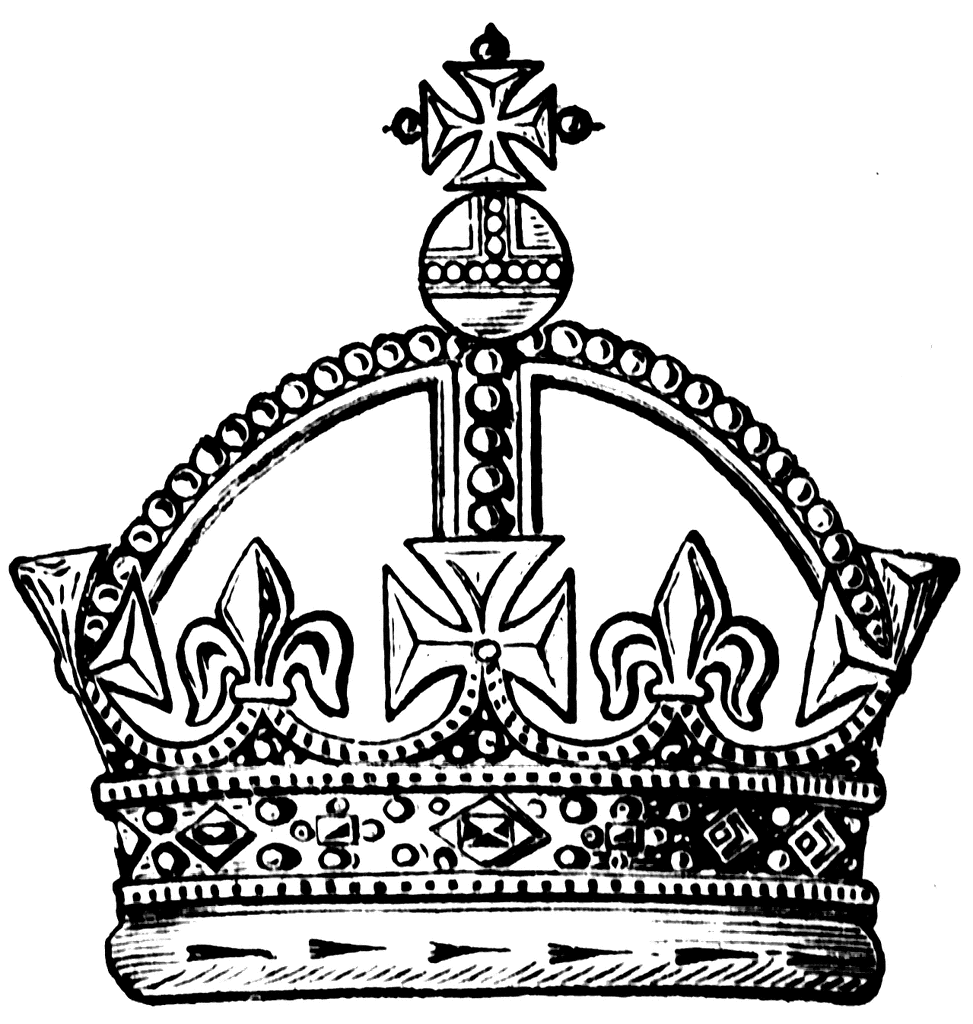 This coming Sunday is traditionally known as "Christ the King Sunday." It's hard for us Americans to get our heads around the concepts of monarchy, as we haven't had to deal with a monarch for almost 230 years. (We can ask our ex-pat Brits for a basic primer on living as a royal subject after church. . .)
But, the titles of monarchy: King and Kingdom, are used over and over again in the Gospels to describe the role of Jesus and his reign over the realm of God. It's staggering to think about a poor Jewish carpenter who was born in a barn and who had 'no place to lay his head' as a 'King.' And, quite frankly it was just as staggering for the people who were listening to Jesus talk and rise in popularity 2,000 years ago.
But, his identity as King was a central claim of his life and purpose - and the importance of him being a descendant of King David and King Solomon solidified that claim.
But, HOW Jesus was King is the really staggering piece, because Jesus' crowning in the Gospels was specifically identified not with an opulent ceremony and golden crown, but rather with a cross and a crown of thorns. When the Gospel writers wrote the scenes of trial and execution, they wrote them to be the coronation.
Because that's the kind of King Jesus was. And is.
Jesus' reign was not only inaugurated on the cross, but it is indentified by the cross. The cross and tomb are markers for the kind of reign he established and maintains today.
Try and wrap you head around that.
What does that say about leadership? About power? And about the way we're supposed to run the church - God's Kingdom embassies on earth?
And, what does it say about us, who are supposed to be subjects to that kind of King?
When we stop to ponder the royal reign of Christ from the foot of the cross - or as we'll do in a few short weeks from the foot of the manger - we not only get a glimpse into who Jesus really was, and is. But, truly, we get a better picture of who we are meant to be.
Subscribe to:
Posts (Atom)